Brazilian roads accumulate functions that their original design did not foresee. Redistributing the road section and taking care of the pedestrian scale are technical responses—and increasingly, licensing requirements.
Much of what is called "traffic conflict" is treated as a behavioral problem: the pedestrian crossing outside the crosswalk, the motorcyclist lane splitting, the driver who doesn't respect pedestrian crossings. This interpretation is convenient because it shifts the solution to educational campaigns and enforcement. But the numbers suggest a different origin.
Approximately 401,300 urban trips in Brazil are made on foot or by bicycle, according to the ANTP's Urban Mobility Information System. Even so, the cross-section of most urban roads was designed almost entirely for the flow of motorized vehicles. When four out of ten trips compete for the smallest slice of available space, friction is a predictable consequence of the design—not a deviation from proper conduct. The result is reflected in data from the Ministry of Health: 15 pedestrians die every day in Brazilian traffic. A survey by Abramet shows that 761,300 of the serious victims are pedestrians, cyclists, or motorcyclists.
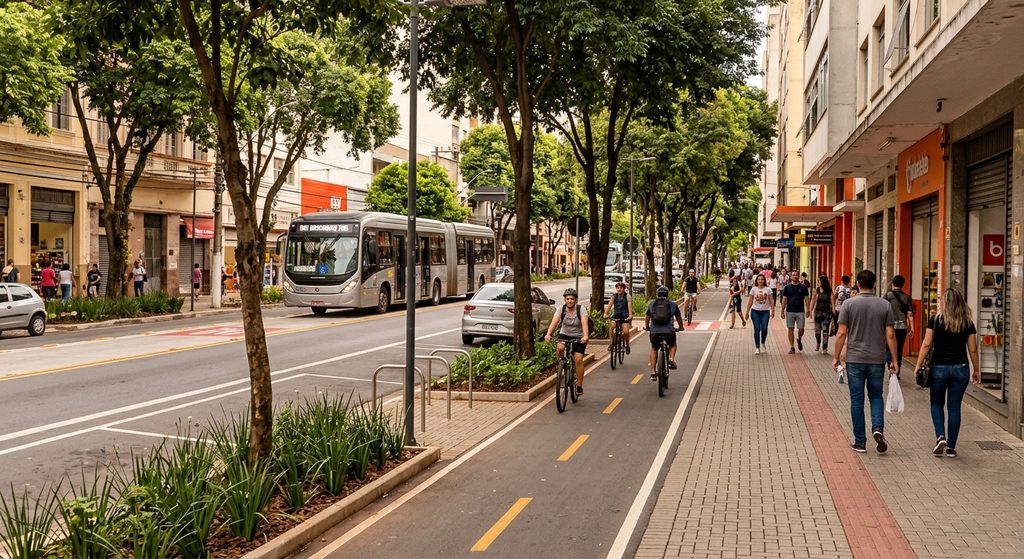
Complete Streets: redistribute space according to actual use.
The Complete Streets concept starts from a simple premise: the street is circulation infrastructure. and Public space, and its design, must cater to all users — those who walk, cycle, use public transport, drive, load and unload.
In practice, this means abandoning the single standard for road sections and designing according to the specific needs of each stretch. A commercial street in a historic center, a street bordering a school, and a bus corridor have different demands, and replicating the same profile in all three cases guarantees that at least two will function poorly.
In Brazil, the concept gained traction starting in 2017 with the National Network for Low-Carbon Mobility, coordinated by WRI Brazil and the National Front of Mayors. Between 2017 and 2020, 21 Brazilian cities developed projects using this approach.
Microaccessibility: the scale that determines whether the journey happens
Complete Streets deals with the road itself. Microaccessibility deals with the final stretch—the scale at which movement actually takes place or becomes impossible.
It's the usable width of the sidewalk, the existence of a ramp at the curb cut, the distance and quality of the bus stop, the unevenness at the corner, the last 300 meters between public transport and the entrance. A mobility system can have excellent macro-accessibility—good line coverage, good connectivity—and still not be used because the walking route to the station crosses an 80-centimeter-wide sidewalk occupied by a lamppost and a trash can.
The two scales are interdependent. Widening the sidewalk without addressing pedestrian crossings creates a generous space that no one can access; improving crossings on a street where pedestrians lack a continuous clear path solves one problem but keeps the route interrupted.
The technical repertoire
Four interventions account for the majority of measurable gains:
Redistribution of the road section. Converting an underutilized traffic lane or parking space into a sidewalk, bike lane, or dedicated bus lane. This is the structural intervention—the others depend on the space it frees up.
Reduction of the crossing distance. Curb extensions, refuge islands, and raised crosswalks shorten the exposed distance and increase mutual visibility between pedestrians and drivers. They also reduce the turning radius at intersections, which naturally decreases turning speed.
Speed appropriate for the type of road used. According to the World Health Organization, the risk of death in a pedestrian accident at 50 km/h is about five times greater than at 30 km/h. On roads with heavy adjacent traffic—commercial areas, schools, healthcare facilities—the speed limit is a design decision, not just a signage one.
Continuous free lane. Brazilian standard NBR 9050 establishes 1.20 m as the minimum width for a clear, unobstructed lane, including ramps and tactile paving. This requirement transforms a sidewalk into a circulation infrastructure.
Test before you build.
The most frequent argument against road redesign is the cost — and the risk of making mistakes in a permanent structure. Tactical urbanism addresses both: the new configuration is implemented with paint, horizontal signage, blocks, and removable street furniture; its real-world behavior is measured; and only then is it consolidated into permanent material.
The first Complete Street in Brazil, on Rua Joel Carlos Borges (São Paulo, 2017), followed this logic. Evaluated two months after implementation, it registered 92% approval ratings among street users. The approach also changes the nature of the public debate: instead of discussing a blueprint, merchants and residents discuss a street they can already use.
Where does this relate to licensing?
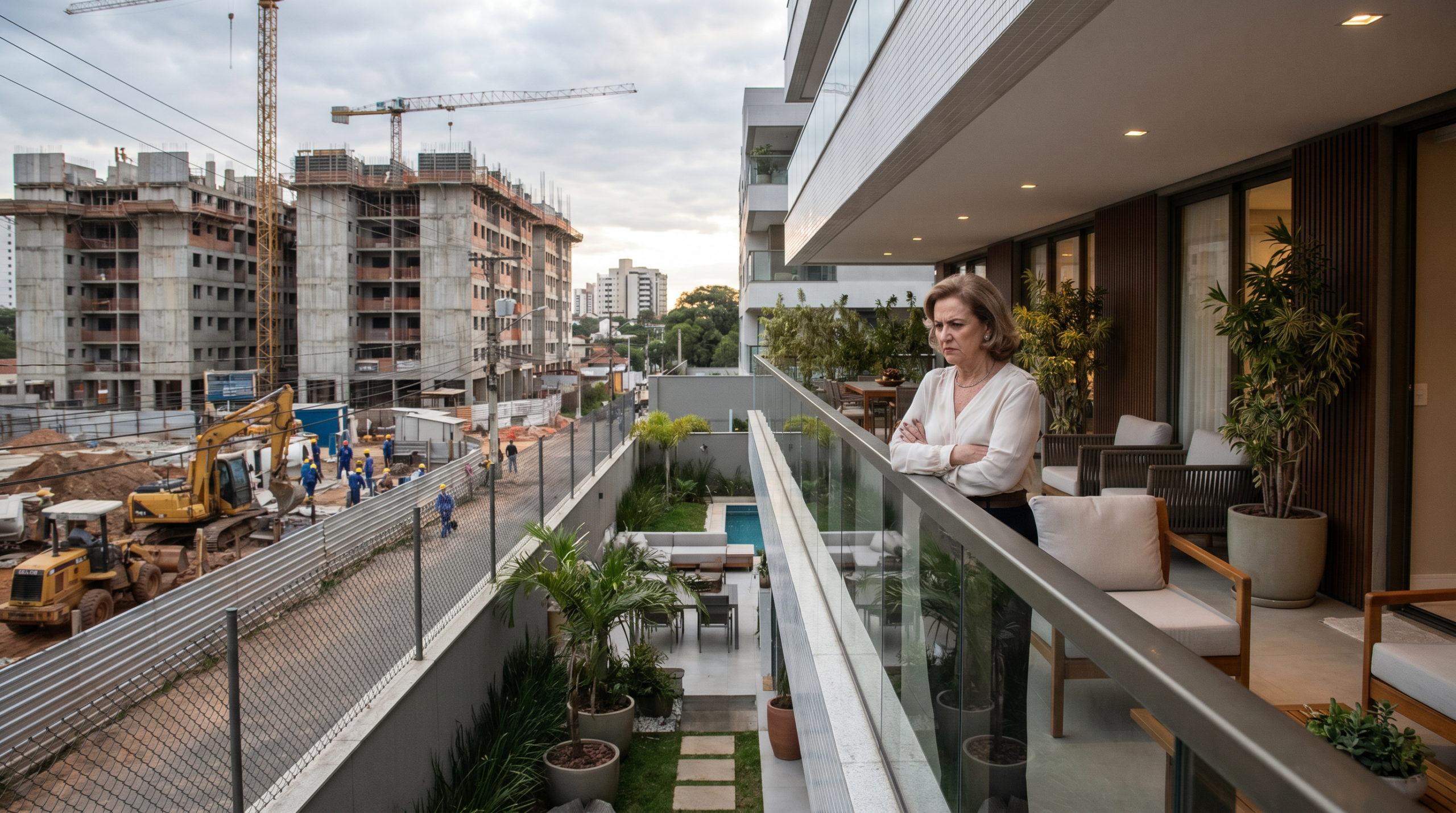
For entrepreneurs, this agenda, in addition to being a matter of urban policy, is also a condition for the success and licensing of projects. Neighborhood Impact Studies, Traffic Impact Reports, and analyses of trip-generating centers frequently result in requirements for road infrastructure improvements—and the quality of the technical response determines whether the measure becomes merely a cost or an asset of the project.
A well-designed compensatory measure resolves access issues to the development, meets the requirements of the licensing body, and improves the living conditions of those in the surrounding area. A compensatory measure treated as a checklist item usually delivers all three things only halfway.
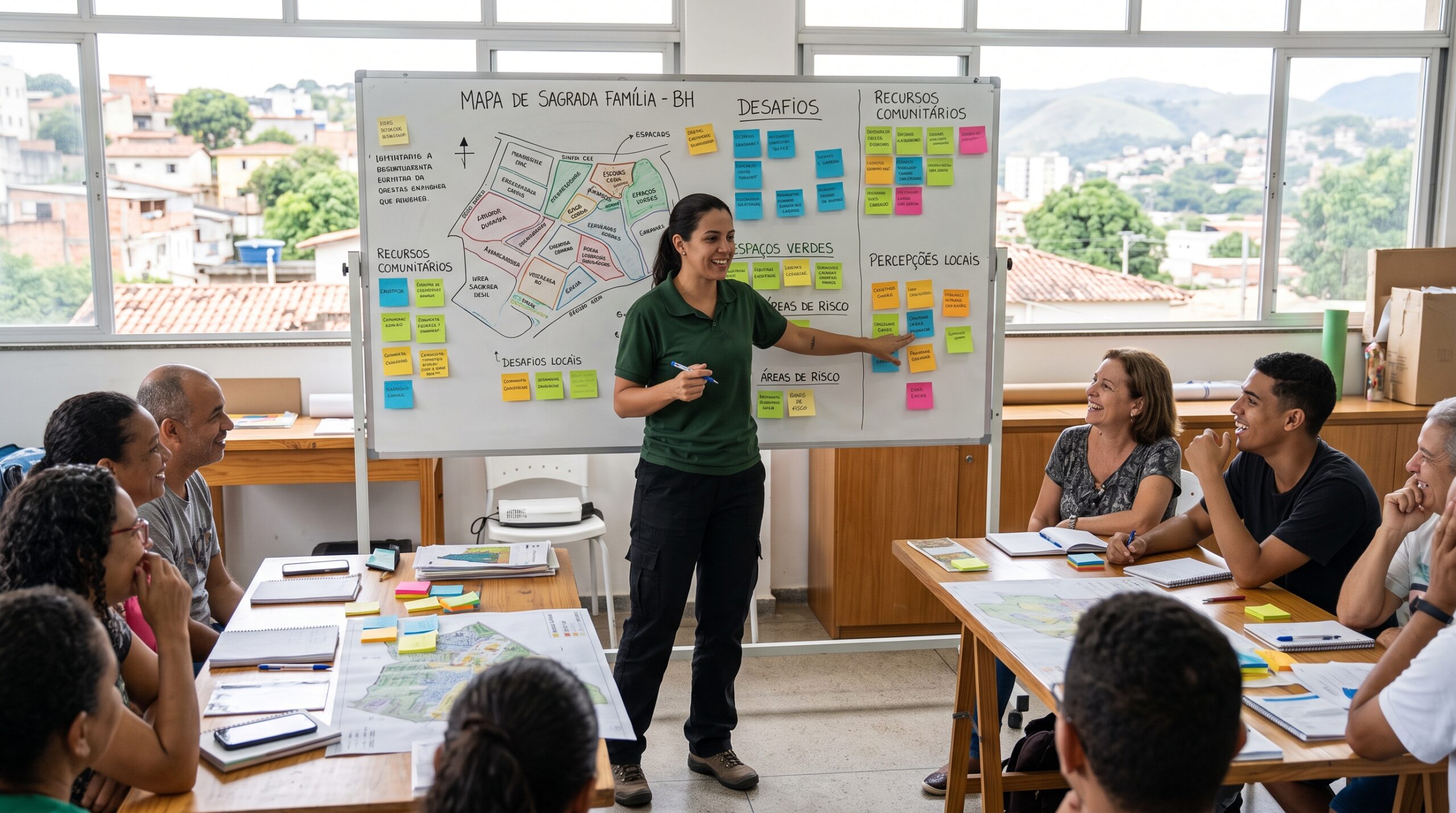
Ecominas works in the evaluation of mobility impacts in urban and environmental licensing processes, translating regulatory requirements into design solutions — with perception research among the affected community when the project requires an understanding of the territory, and not just traffic flow counting.
It is crucial to remember that the concept of "environment" extends beyond the physical-natural dimension to encompass the social world. The strategies…