Reading time: 6 minutes
When we hear the term "Connected Cities" or Smart Cities, The image that emerges in the collective imagination is almost always technological: AI-controlled traffic lights, ubiquitous 5G networks, and autonomous vehicles. However, for us at Ecominas, true urban intelligence resides in a prior and much more fundamental layer: The connection between the built environment, natural systems, and people.
In 2026, with the effects of the climate emergency knocking at the door and population density challenging existing infrastructure, planning urban development is not just a matter of civil engineering; it is a matter of systemic survival and economic viability.
An urban project that ignores the human factor and climate resilience is born obsolete. And obsolete assets lose value.
In this article, we delve into how strategic urban planning — supported by robust impact studies — creates cities that thrive in the long term.
A New Scale of Value
For decades, the real estate market and municipal planning focused on the detached housing unit. The value was "within the gate." Today, that logic has been reversed. The value lies in what happens "outside the door.".
The concept of Walkability It ceased to be an academic idealism and became an indicator of valuation. Planned neighborhoods with mixed-use development (residential, commercial, and services in the same area), active facades (ground-floor shops that interact with the sidewalk), and pedestrian infrastructure generate:
- Passive Public Security: Jane Jacobs' concept of "eyes on the street" proves that busy streets are naturally safer.
- Health and Wellness: Reducing dependence on automobiles directly impacts the physical and mental health of residents.
- Economic Vitality: Local businesses thrive where there is a flow of people, not just a flow of cars.
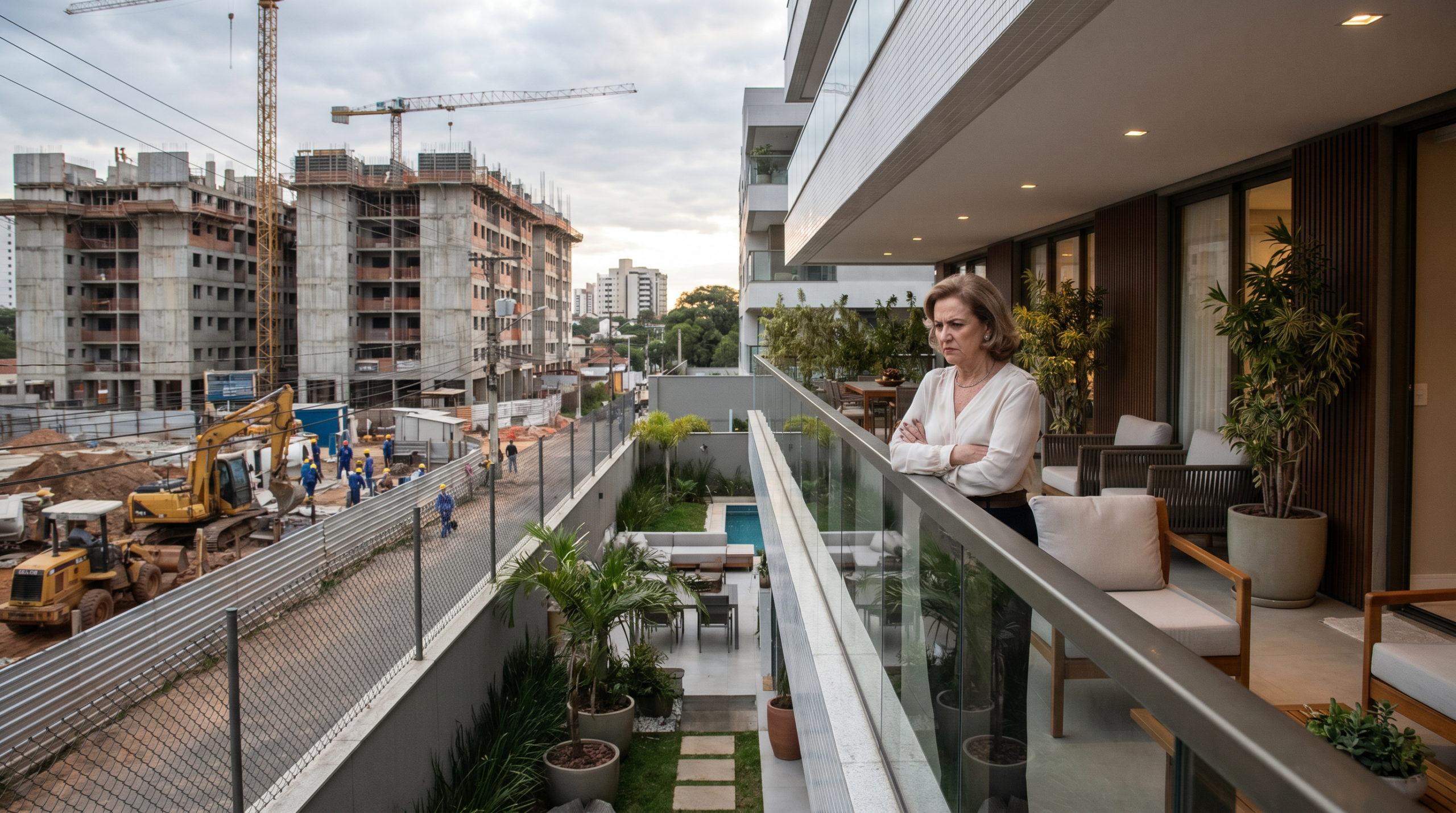
For urban developers, this means that approving a subdivision or a condominium requires... not only mitigating the effects on traffic, but also proposing a qualified integration with the existing urban fabric.
Green Infrastructure: The City as a Sponge
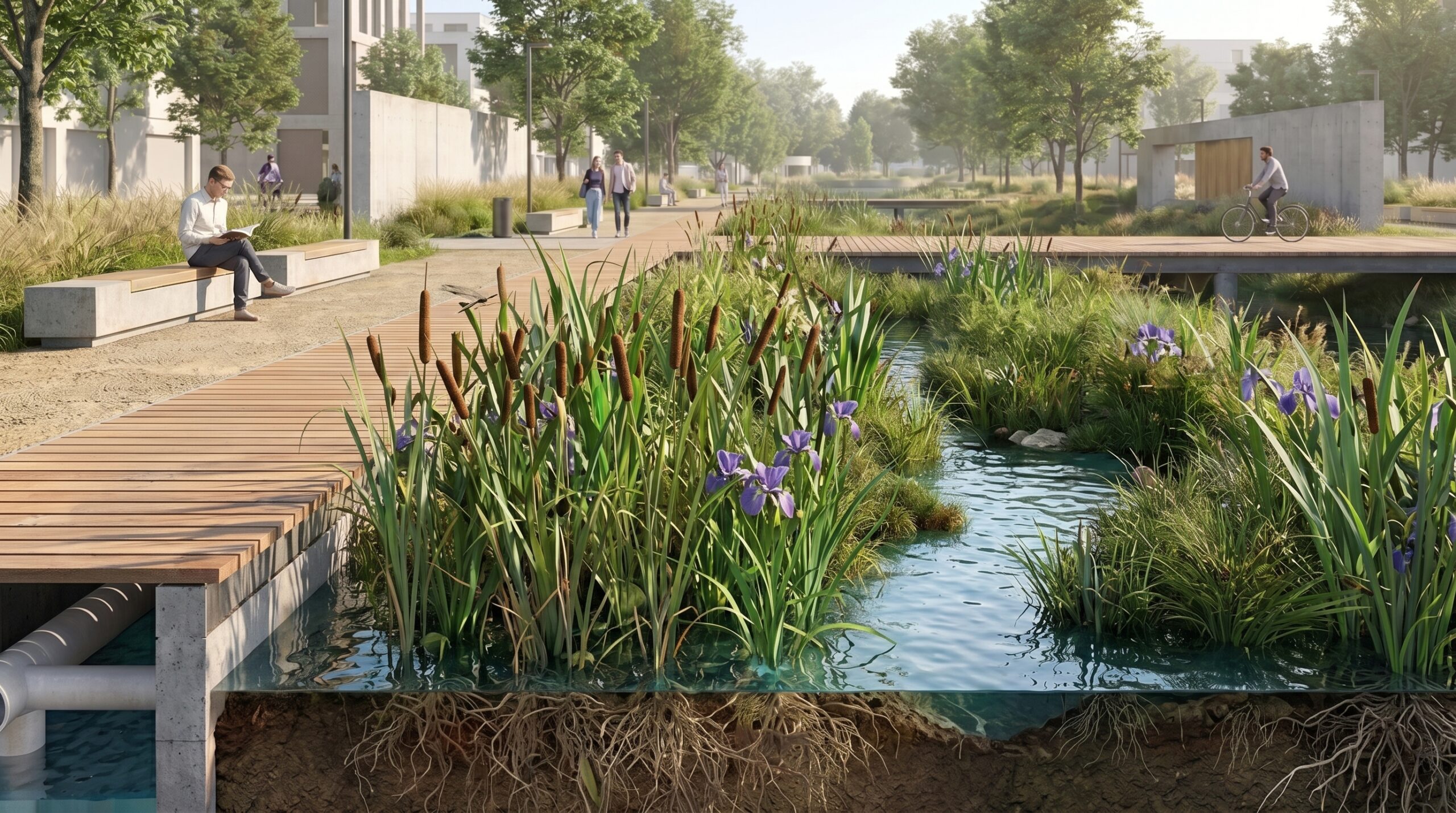
The 20th-century urban planning model attempted to dominate nature through "Grey Infrastructure": channeling streams, burying rivers, and completely waterproofing the soil. The result, as we see every rainy season, is catastrophic: flash floods, drainage collapse, and unbearable heat islands.
The city of the future — and the only viable one — is... Sponge City.
The application of Nature-Based Solutions (NbS) In urban planning, the logic of engineering changes:
- Instead of draining the water quickly (which overloads the downstream galleries), the goal is retain and infiltrate.
- Rain gardens, bioswales, linear parks and permeable pavements They become essential infrastructure devices.
Strategic Value: For municipal governments and private entrepreneurs, green infrastructure reduces the CAPEX (capital expenditures; often cheaper than large macro-drainage works) and drastically the OPEX (maintenance and post-disaster recovery costs). In addition, green areas increase the value of surrounding properties by significantly higher percentages than arid areas.
Mobility and the Logic of TOD (Transport-Oriented Development)
A connected city is one where commuting time doesn't compromise quality of life. This is a global trend, which Brazil is beginning to adopt more strongly through revisions to its Master Plans. DOT (Transport-Oriented Development).
This means densifying the city along mass public transport corridors. Building more where mobility infrastructure already exists. By planning urban development from this perspective, we combat urban sprawl (the city that grows horizontally without end), which is financially unsustainable for municipalities and ecologically disastrous.
The Role of Regulation: Environmental Impact Assessments and Masterplans as Design Tools
This is where Ecominas' expertise comes in. Frequently, instruments such as the Neighborhood Impact Study (NIS), the Traffic Impact Report (RIT) Urban environmental licensing or other processes are seen as bureaucratic obstacles.
That's a shortsighted view.
When executed with technical rigor and a systemic vision, these studies are true urban design tools. They allow:
- Diagnosing vulnerabilities before investing the capital.
- Design mitigating measures that generate a positive legacy (e.g., transforming environmental compensation into the creation of a public park that enhances the value of the development itself).
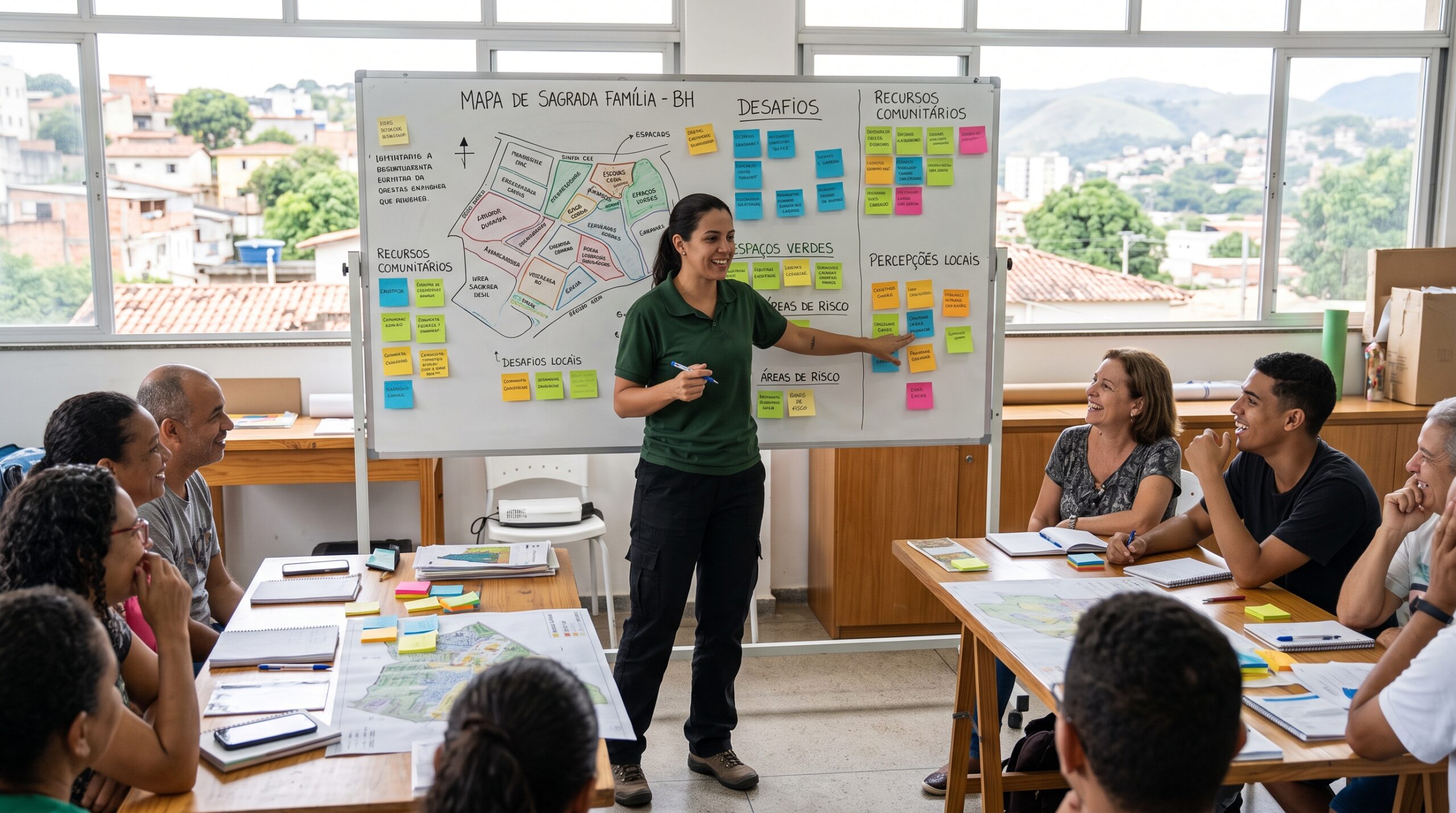
- Ensuring Social Licensing: A project that engages with the neighborhood and solves pre-existing problems (such as drainage or lighting) gains supporters, not opponents.
Sustainable cities don't appear by chance; they are intentional. They are born on the drawing boards of architects who understand people, in the spreadsheets of engineers who understand climate, and in the reports of consultants who understand strategy.
Urban development focused on people and the future is the meeting point between social and environmental responsibility and financial success.
At Ecominas, we don't just license projects; we help create spaces where urban life can thrive with safety, resilience, and value.
Ecominas has 23 years of experience in environmental and urban planning licensing and studies, connecting regulatory compliance to business strategy.