Potential for Urban Transformation: The Case of Fish Tail Park in China
May 19, 2023
By Laís Rosa
CasesEnvironmentTendenciesUrban planning
The redevelopment of degraded urban areas is one of the main challenges faced by cities worldwide. The case of... Fish Tail Park, located in Nanchang, The Yangtze River floodplain in east-central China stands as a remarkable example of how nature-based solutions can transform abandoned urban space into multifunctional green infrastructure.
Context and Challenges
The site originally housed an old urban landfill and a disused fish farm. In a span of just three years and with a relatively modest budget, the area of approximately 51 hectares (126 acres) It was completely transformed by the office team. Turenscape in a floating forest-park. The project's main objectives were:
Regulate rainwater and mitigate flooding;
To restore the local ecosystem and create habitat for wildlife;
To promote spaces for leisure and reconnection with nature for city dwellers;
To promote sustainable urban development in the surrounding area.
Reproduction: turenscape.com
Technical Solutions and Infrastructure
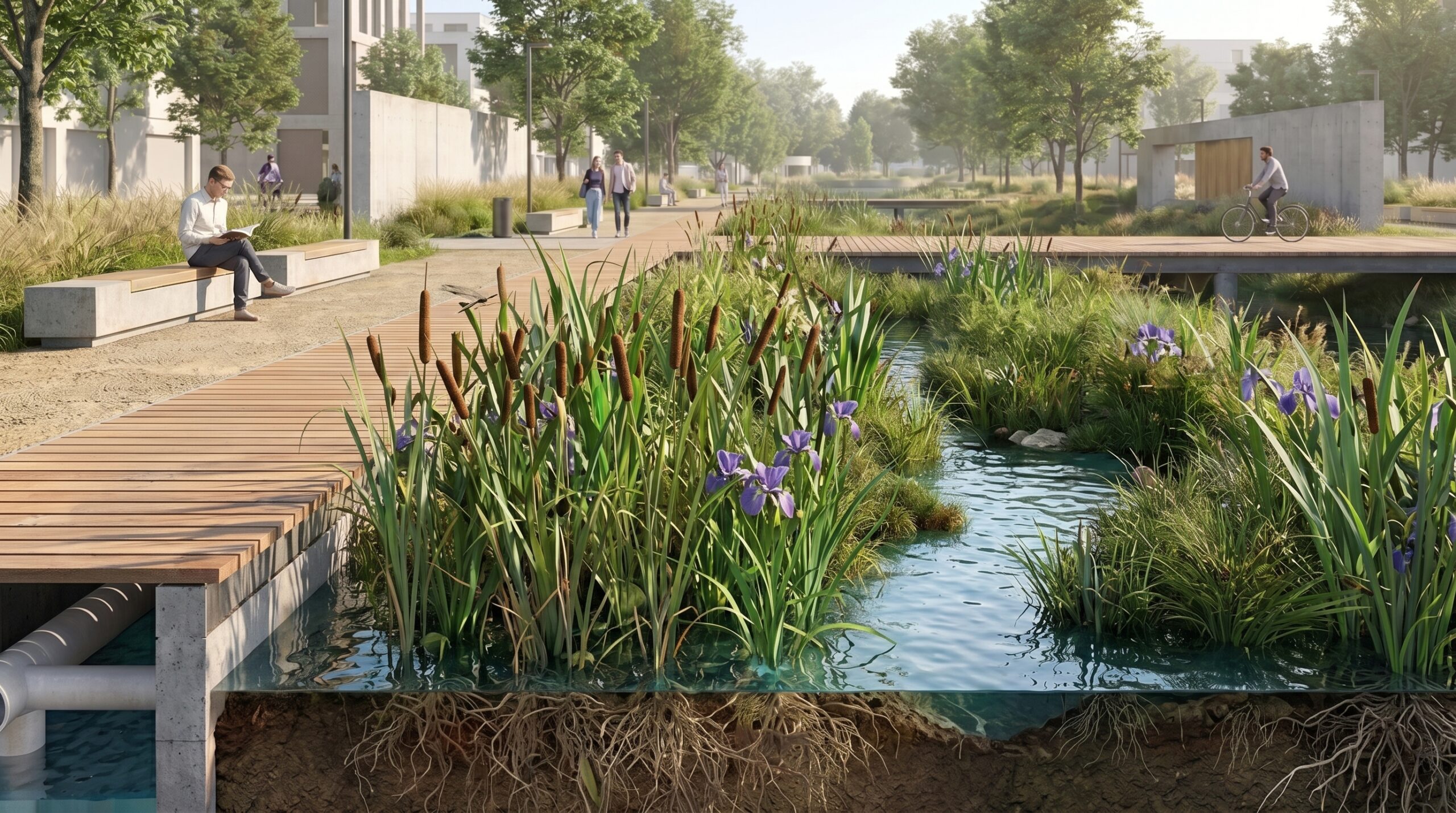
The park was designed to operate within the natural dynamics of the region's monsoon climate. A network of walkways, platforms and trails It skirts the central lake and connects a series of wooded islands, providing controlled access to restored vegetation and wetlands. The main boardwalk was designed to support Seasonal floods — such as those with a 20-year recurrence cycle — being built with precast concrete elements, easily washable and suitable for temporary submersion.
Banks in durable aluminum Elevated structures ensure functionality even after extreme events, while bike paths and service roads are positioned above the flood line, guaranteeing permanent accessibility to the park's surroundings.
Environmental and Urban Impact
Fish Tail Park has started offering holistic ecosystem services, contributing to urban resilience in the face of climate change, while also establishing itself as one of the most visited parks in the region. Its implementation was also a catalytic factor in the revitalization of the adjacent neighborhood, adding real estate value and promoting a new urban identity.
The project exemplifies a A replicable model of ecological urbanism., This is especially relevant for cities in tropical and subtropical regions with intense rainfall patterns and climate seasonality. Initiatives like this demonstrate the potential to transform underutilized or degraded urban areas into resilient green infrastructure, with multiple environmental, social, and economic benefits.
Inspiration for Brazil
Given the numerous degraded areas present in Brazilian cities, the example of Fish Tail Park offers... concrete inspiration For public policy makers, urban planners, and landscape architecture professionals, transforming environmental liabilities into ecological and social assets is not only feasible but also strategic for sustainable urban development in the Brazilian context.
It is crucial to remember that the concept of "environment" extends beyond the physical-natural dimension to encompass the social world. The strategies…