The Essence of Social License: Reputation and Community Relations at the Heart of Responsible Mining
August 14, 2025
By Laís Rosa
EducationESGEnvironmentNatural ResourcesSocial
In the current mining landscape, especially in Minas Gerais, where mining activity is deeply intertwined with the lives of communities and the environment, the "Social License to Operate" (SLO) has emerged from a mere formality to become the cornerstone of the sustainability of any undertaking. More than government licenses or technical approvals, the SLO represents the ongoing acceptance and approval of the communities and stakeholders directly affected by a mining company's operations. Without it, even the most promising projects risk paralysis, litigation, and ultimately, failure. The company's reputation, once seen as a "soft skill," is now a tangible asset, directly linked to its ability to build and maintain lasting relationships of trust.
The context of mining in Minas Gerais and LSO:
Minas Gerais, with its vast mineral wealth, has a complex and sometimes challenging history with mining. Past events have highlighted the urgency of a paradigm shift: from a reactive to a proactive approach, focused on prevention and respect. It is in this context that LSO (Law on Social Responsibility) takes on even more critical dimensions. It reflects the perception of the company's legitimacy before society. A study by the Harvard Kennedy School (2016) even indicated that the costs of conflicts between companies and communities due to a lack of transparent communication can reach an impressive US$20 million per week in operational delays. This transforms a good relationship into an imperative not only ethically, but also economically and strategically.
Pillars for Building and Maintaining a Social License to Operate:
Transparent and Continuous Dialogue:
The foundation of any healthy relationship is communication. For mining companies, this means going beyond mandatory public hearings. It involves establishing accessible, multi-channel communication, such as community advisory committees, ombudsman offices, and digital platforms. Essentially, communication must be a two-way street, where the company not only informs but actively listens, responds to concerns, and shows itself open to criticism and suggestions. Transparency in disclosing operational data, impacts, and mitigation plans is crucial to combating misinformation and strengthening trust. Overcoming the image of a "closed sector," as pointed out in debates about communication in mining, is a constant challenge.
Responsible Social Investment and Shared Value Creation:
It's not just about philanthropy or fulfilling offsetting obligations. Social investment must be strategic, aligned with the real needs of communities and the Sustainable Development Goals (SDGs) relevant to the region. Programs focused on education, health, sanitation, support for local entrepreneurship, and infrastructure generate tangible value. Instead of simply "donating," the company should seek partnerships that empower communities to be protagonists of their own development, creating a virtuous cycle of mutual benefit. Clear measurement of the socioeconomic impacts of these investments is vital.
Managing Expectations and Clear Commitments:
It is essential that the mining company be realistic and transparent about the impacts of its operation – both positive and negative. Exaggerated or unfulfilled promises erode trust and generate conflict. All commitments made, whether environmental, social, or economic, must be clear, documented, and openly communicated. Monitoring community perception and adjusting relationship strategies based on constant feedback is crucial.
Robust Complaint and Dispute Resolution Mechanisms:
Conflicts are, to some extent, inevitable. What distinguishes a responsible mining company is its ability to manage these conflicts fairly, efficiently, and transparently. This involves implementing accessible and community-known complaint channels, with clear investigation and response processes. Impartial mediation and respect for community rights are essential to prevent minor disputes from escalating into major crises.
Continuous Monitoring and Adaptation:
LSO is not a certificate that is obtained once and then stored away. It is a dynamic process that requires constant monitoring. This includes community perception surveys, social audits, and tracking of well-being indicators. The ability to adapt plans and strategies based on the results of this monitoring is a key differentiator for maintaining relevance and social acceptance over time.
The role of Ecominas:
At Ecominas, we understand that building and maintaining a Social License to Operate is a complex but fundamental challenge for the business's long-term viability. Our ESG and sustainability consulting services are designed to help mining companies:
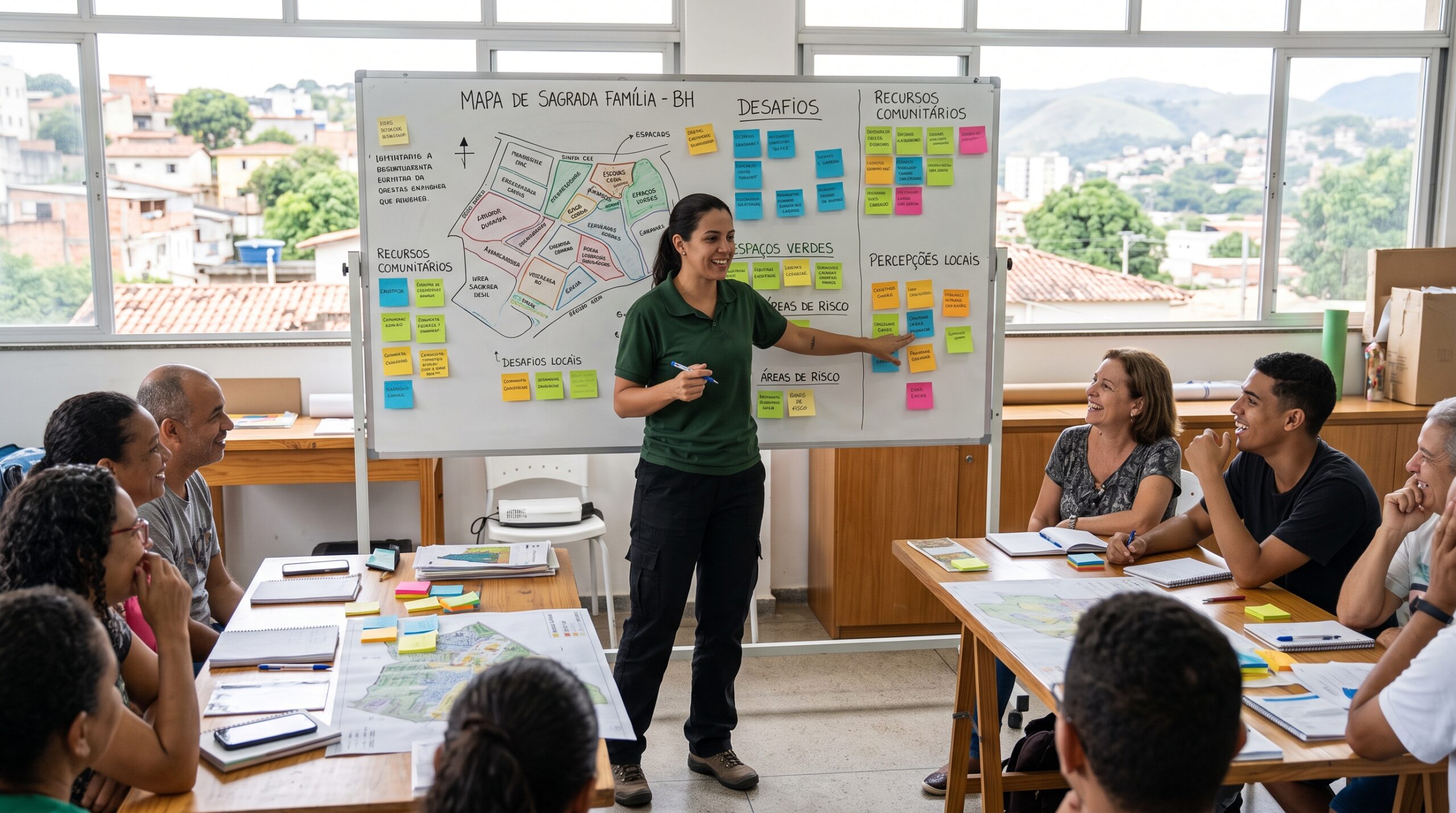
Map and engage your stakeholders effectively.
Develop and implement robust community relationship plans.
To measure and communicate the socioeconomic impact of its operations and investments.
Managing social and reputational risks.
Empowering teams for more constructive dialogue with communities.
The Social License to Operate is, today, the true gold of responsible mining. It proves that profit and purpose are not only compatible, but interdependent. Companies that proactively invest in building trusting relationships and generating shared value with communities not only mitigate risks, but also strengthen their reputation, attract investment, and ensure the long-term sustainability and prosperity of their operations. It is an ongoing commitment that paves the way for a fairer, more equitable, and socially acceptable future for mining.
It is crucial to remember that the concept of "environment" extends beyond the physical-natural dimension to encompass the social world. The strategies…