Retrofit as a Sustainable Strategy for Urban Regeneration
November 24, 2023
By Sabrina Di Blasio
ArchitectureSocialUrban planning
During my studies in Architecture and Urban Planning, a persistent question arose: how do European cities, remodeled in the 19th century—such as Paris with the Haussmann Plan, or Barcelona with the Cerdà Plan—manage to keep buildings from that era in full use to this day? It is observed, for example, that the morphology and architectural scale of Paris continue to compose its urban landscape with a strong visual identity and contemporary functionality.
Meanwhile, the situation in Brazilian cities like Belo Horizonte is quite different. The center of the Minas Gerais capital is marked by obsolete high-rise buildings, many of them closed and without prospects for reoccupation. The ongoing dynamic of building replacement, which consists of demolition to construct new towers, presents a high environmental cost: it generates construction and demolition waste and consumes large quantities of natural resources and energy.
Retrofit: A New Cycle for Old Buildings
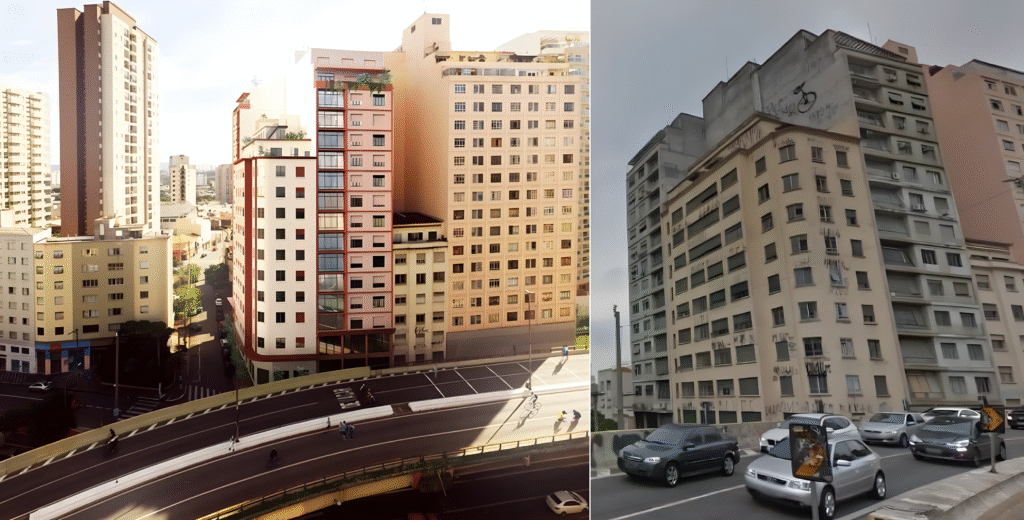
Given this scenario, a promising alternative emerges: reform, renovate, rehabilitate, requalify, restore — actions that come together under the technical and marketing concept of retrofit. This term is used to describe projects that modernize existing buildings, respecting their original structures, but updating their systems and adapting them to contemporary technical standards and demands.
Before and after the retrofit of the Marajó and Juliana Cunha buildings in the Barra Funda neighborhood, central region of São Paulo. Source: Ilion Partners, 2021.
Retrofitting can include revitalizing facades, improving ventilation and natural lighting, updating vertical and horizontal circulation, as well as changing the use of buildings—such as converting underutilized commercial buildings into residential or mixed-use buildings. This strategy allows for adding new value to properties in prime locations, while simultaneously promoting urban preservation, the reoccupation of central areas, and sustainable development.
Examples and Incentives in Belo Horizonte
While cities like São Paulo and Rio de Janeiro already have established experiences in retrofitting, Belo Horizonte is beginning to move in this direction. The city government has incorporated the strategy into its plans. Downtown Redevelopment Program – “Downtown for Everyone”, which aims to promote a more balanced and functional occupation of the central region, encouraging housing, commerce and leisure.
Among the measures implemented are:
updating retrofit legislation,
tax exemptions,
possibility of transfer of constructive potential of rehabilitated buildings,
In addition to urban improvements in public spaces and direct incentives for entrepreneurs.
Initiatives such as the revitalization of New Market and the strengthening of gastronomic hub of Rua Sapucaí They demonstrate the potential of the central region of Belo Horizonte to attract investment and generate new cultural and economic centers.
Featured Cases: Transformed Buildings
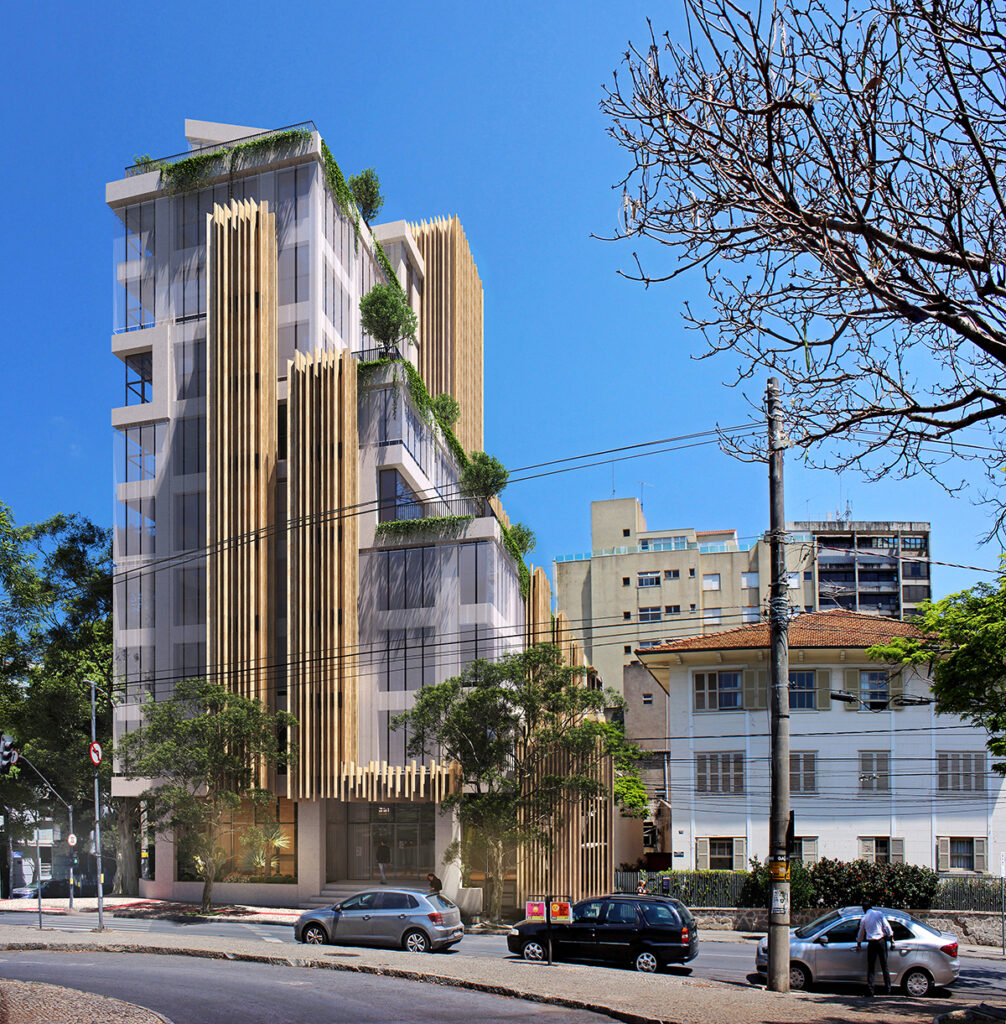
Two emblematic examples of this urban transformation in Belo Horizonte are... Tribe Liberdade Hotel and the Excelsior Building. The first, previously closed and abandoned since 2013, is being transformed into a contemporary hotel, with a project by the OR3 Group. The second, converted from a hotel to a multi-family residential building in 2004, represents a local landmark in the reconversion of uses.
Perspective of the completed Tribe Liberdade Hotel. Source: OR3 Group, accessed in 2023.
These interventions point to viable ways to reuse existing built heritage, helping to reduce the pressure for new construction and revitalize degraded urban areas.
Perspectives
Retrofitting emerges as a technically viable, environmentally responsible, and economically attractive solution to the contemporary challenges of Brazilian cities. It not only preserves urban memory and identity but also reduces the environmental impact of the traditional construction cycle and enhances the quality of life in urban centers.
In Ecominas, We believe that rethinking how we occupy and transform our cities is essential for a more sustainable future. We are actively working to make Belo Horizonte a more vibrant, livable, and regenerative city—and we hope that this idea will take hold and inspire other initiatives across Brazil.
Brazilian roads accumulate functions that their original design did not foresee. Redistributing the road section and taking care of the pedestrian scale…
It is crucial to remember that the concept of "environment" extends beyond the physical-natural dimension to encompass the social world. The strategies…