The Environment and Peripheral Urbanization: A Challenge for Sustainable Balance
December 18, 2024
By Gabriel Cordeiro
ArchitectureEducationSocialUrban planning
The challenge of sustainable balance in peripheral urbanization processes (CALDEIRA, 2017) arises contiguous to the development of urban planning science. During the 19th century, with the Industrial Revolution, the availability of jobs in factories and the search for better living conditions led to rural exodus. This phenomenon resulted in an accelerated urbanization process, characterized by the densification of cities. The high influx of people to urban centers overloaded existing infrastructures, which were not prepared to accommodate such a population contingent, producing uncontrolled occupation processes in unsuitable areas. Thus, the need for a science capable of planning and structuring cities, organizing the urban chaos generated by this uncontrolled expansion, became evident.
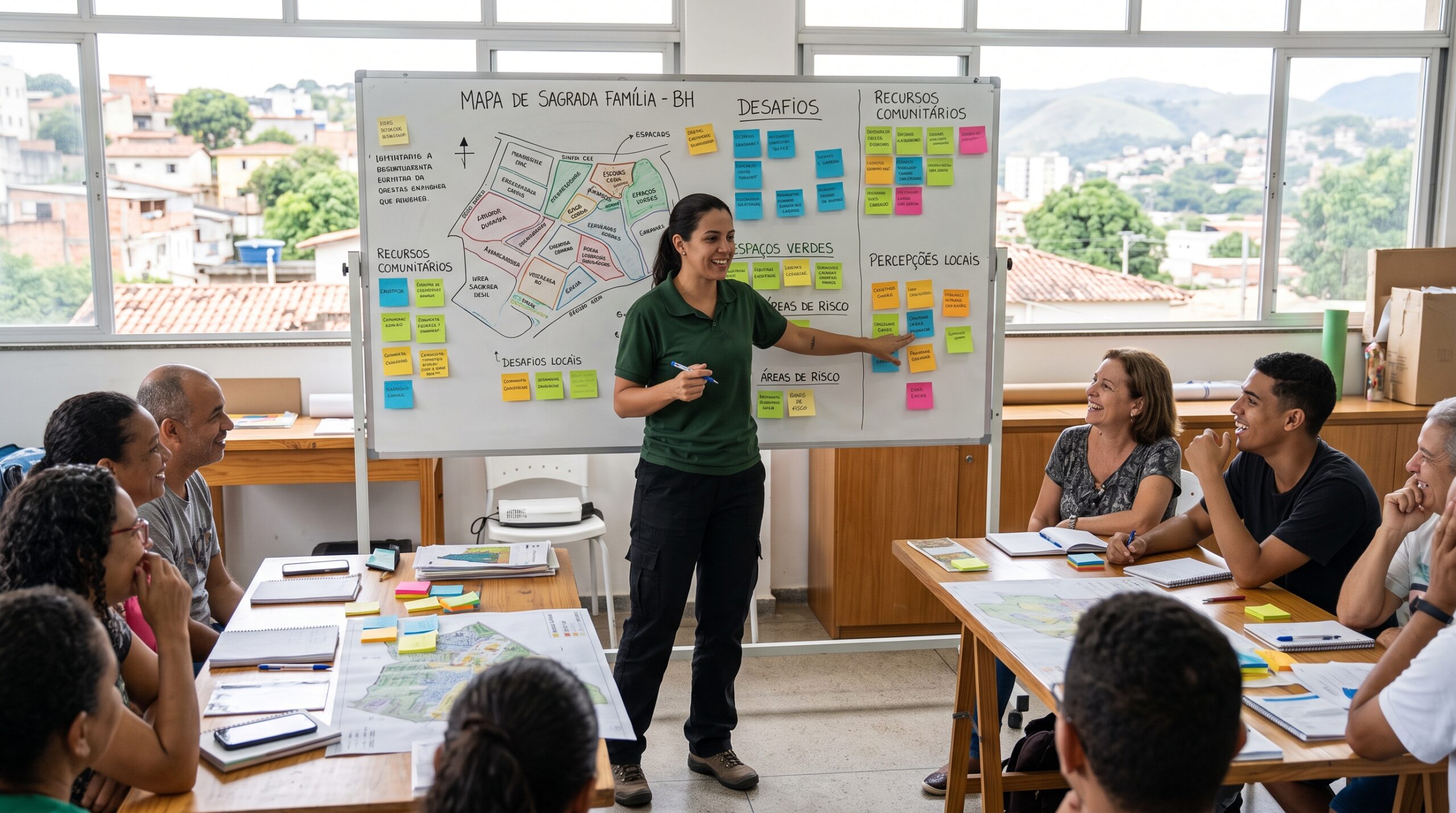
“"For a detailed study, it is necessary to analyze the particularities of informal settlements, case by case, considering their historical, social, political, and geographical contexts."”
In the Brazilian context and that of many other underdeveloped countries, with late industrialization, the peak of population growth occurred between the 1970s and 1980s (IBGE, 2023), where the number of favelas increased by 23% compared to previous decades (PEGURIER, 2005), evidencing the uncontrolled urban growth and the latent process of peripheral urbanization in the country.
Based on a historical understanding of the processes that gave rise to peripheral urbanization, it is necessary to recognize that the analysis that follows addresses peripheral urbanization in a general way, given the publication format, without a specific object of study.
Cities, Inequality and Risk
Social inequality in cities is the central factor in the process of peripheral urbanization. Large urban centers concentrate job opportunities, services, health, education, and leisure, and individuals seeking better living conditions tend to move closer to these resources. However, the high cost of urban land in central areas prevents low-income populations from residing in these locations. Consequently, these populations, who need access to urban services, end up concentrating in the peripheries, in areas with lower land value and further away from urban centers.
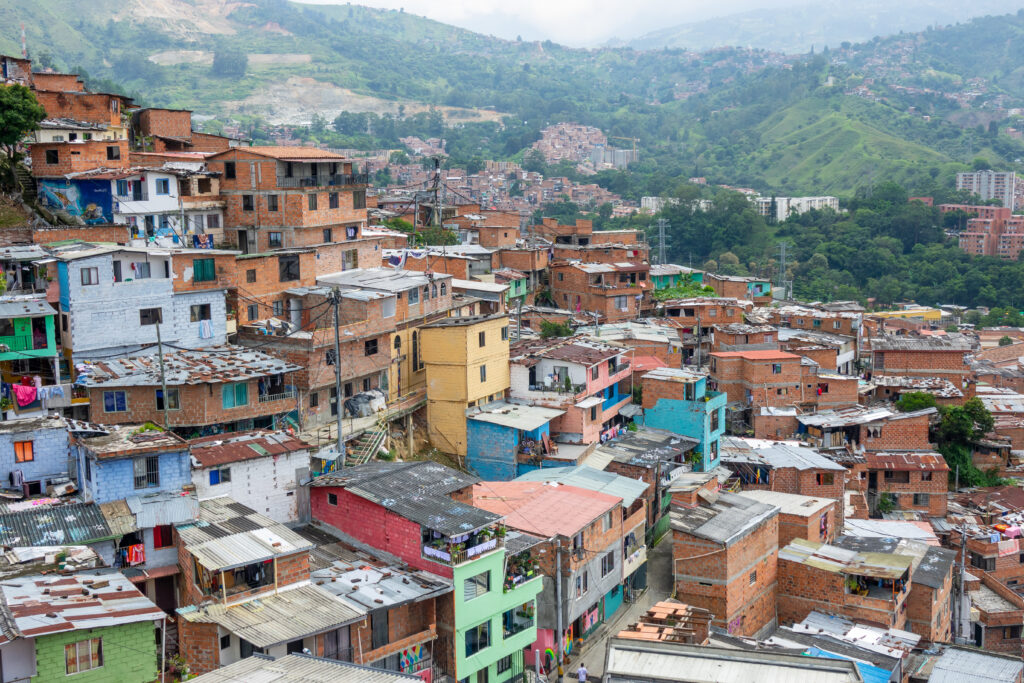
This real estate phenomenon favors the formation of large favelas, especially in Brazil, where, through the agglomeration of small "grains," a socially and culturally dynamic organism emerges, but one marked by unequal organization.
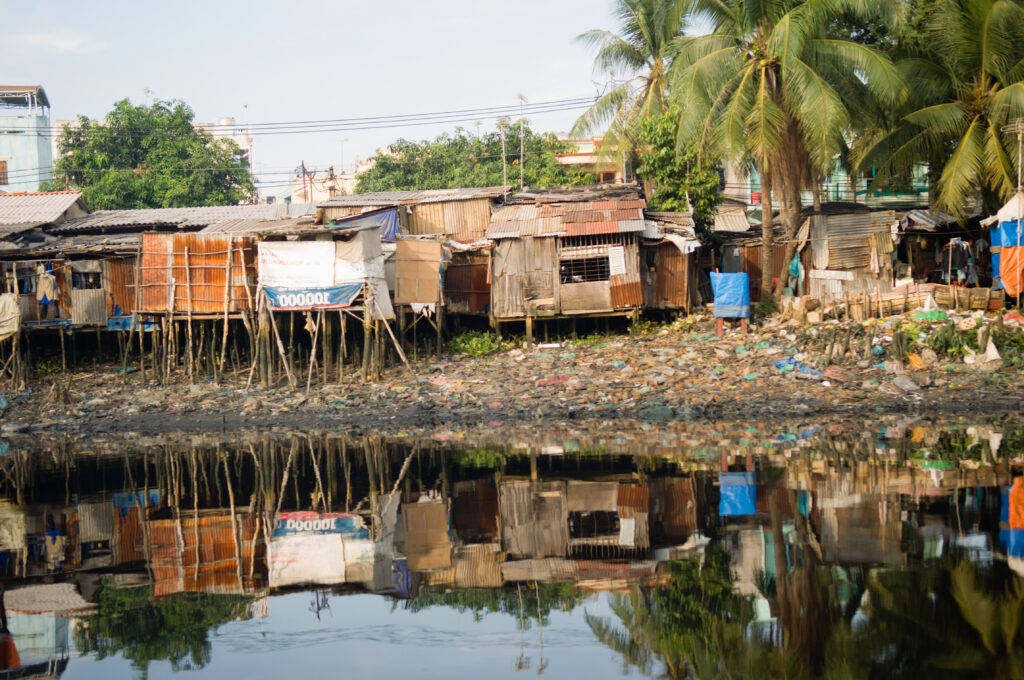
Following the logic of the real estate market regarding the value of urban land, low-cost occupation near the city often occurs close to areas that pose a risk to human habitation. Frequent examples include irregular occupation in areas prone to flooding and landslides, revealing the conflict between the environment and peripheral urbanization.
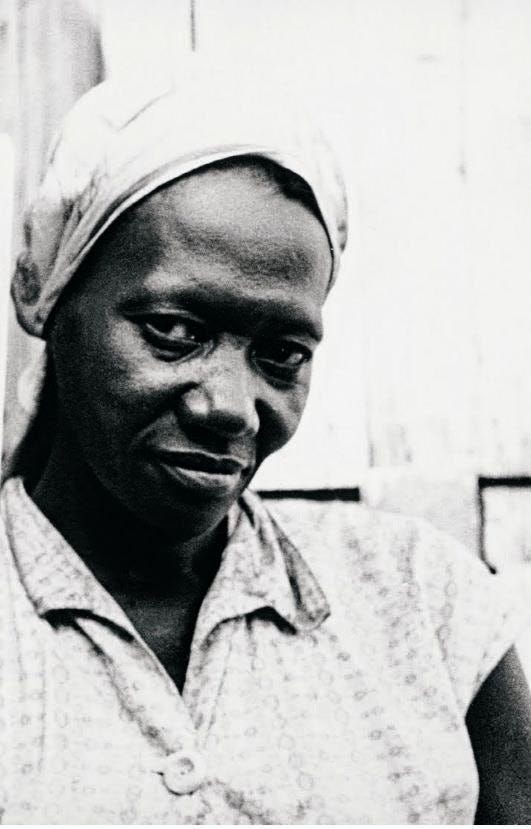
Maria Carolina de Jesus, a resident of the now-extinct Canindé favela in São Paulo, compiled in her book "Quarto de despejo: Diário de uma favelada" (Room of Discard: Diary of a Favela Dweller) several diaries written between July 15, 1955, and January 1, 1960, where she describes the precarious life she lived in the outskirts of São Paulo. It is interesting to highlight one of the author's testimonies throughout the text, which demonstrates the peripheral occupation on the banks of the Tietê River, showing the challenge between access to housing and the environment:
“… We are poor, we came to the riverbanks. The riverbanks are places of garbage and outcasts. People from the favela are considered outcasts.” (Jesus, 1960/2007, p. 55)
Maria Carolina de Jesus is a symbol of Black and marginalized resistance in the face of the need to occupy precarious areas in order to survive.
The fact is that high population demand and the environment coexist: the population and the city grow, individuals need housing, and the environment needs to be preserved. Within this perspective, obstacles to a sustainable balance between these two elements are identified as: the difficulty of preserving natural resources in areas that have already been densely populated, as well as the State's failure to implement direct measures to solve the housing problem.
As long as individuals lack access to full housing in locations free from environmental risks, informal occupation in areas that harm the dynamics of the environment will continue to exist due to the aforementioned economic factors. Therefore, even though the problem of housing in areas of preservation and environmental risk involves many layers of analysis and does not have a magic formula for overcoming it, it is possible to affirm that the challenge for sustainable balance in peripheral urbanization is related to the improvement of public policies for access to housing. For the UN, the right to housing is not only about habitability, but also about access to infrastructure, a location that allows access to employment, services, facilities, affordable prices, cultural adequacy, security of property rights, and accessibility for all social groups (UNITED NATIONS, 1991).
References:
CALDEIRA, TP Peripheral urbanization: Self-construction, transversal logics, and politics in cities of the global south. Environment and Planning D: Society and Space, v. 35, no. 1, p. 3–20, 26 Jul. 2017.
UNITED NATIONS. Committee on Economic, Social and Cultural Rights. General Comment No. 04: The Right to Adequate Housing (Art. 11, Para. 1). Geneva, 1991. Available at: http://www.unhchr.ch/tbs/doc.nsf/0/469f4d91a9378221c12563ed0053547e. Accessed on: Dec. 6, 2024.
Brazilian roads accumulate functions that their original design did not foresee. Redistributing the road section and taking care of the pedestrian scale…
It is crucial to remember that the concept of "environment" extends beyond the physical-natural dimension to encompass the social world. The strategies…